
Plantar Warts Treatment in Bellevue
Plantar warts are stubborn, often painful growths on the bottom of the foot that rarely clear with drugstore products alone. Dr. Hubert Lee confirms the diagnosis and matches the treatment to the wart, from cryotherapy and prescription medication to Swift microwave therapy.
Plantar warts treatment in Bellevue at CarePlus Foot and Ankle Specialists starts with confirming that the growth is a wart, since warts, calluses, and corns are easy to confuse and are treated differently. Warts are common in children, athletes, and anyone who uses shared showers or pool decks, and because they grow inward under the weight of walking, they tend to get deeper and more painful the longer they are left. Board-certified podiatrist Dr. Hubert Lee offers the full range of wart treatments in one office. If you need to be seen quickly, we offer same-day and urgent care appointments.
What are plantar warts?
Plantar warts (verruca plantaris) are small, rough growths on the soles of the feet caused by strains of the human papillomavirus (HPV), usually picked up from damp shared surfaces. Because the sole bears your weight, the wart is pushed inward, which is why it can feel like a pebble underfoot and why surface treatments often miss its deep root. Warts can appear singly or in clusters called mosaic warts.
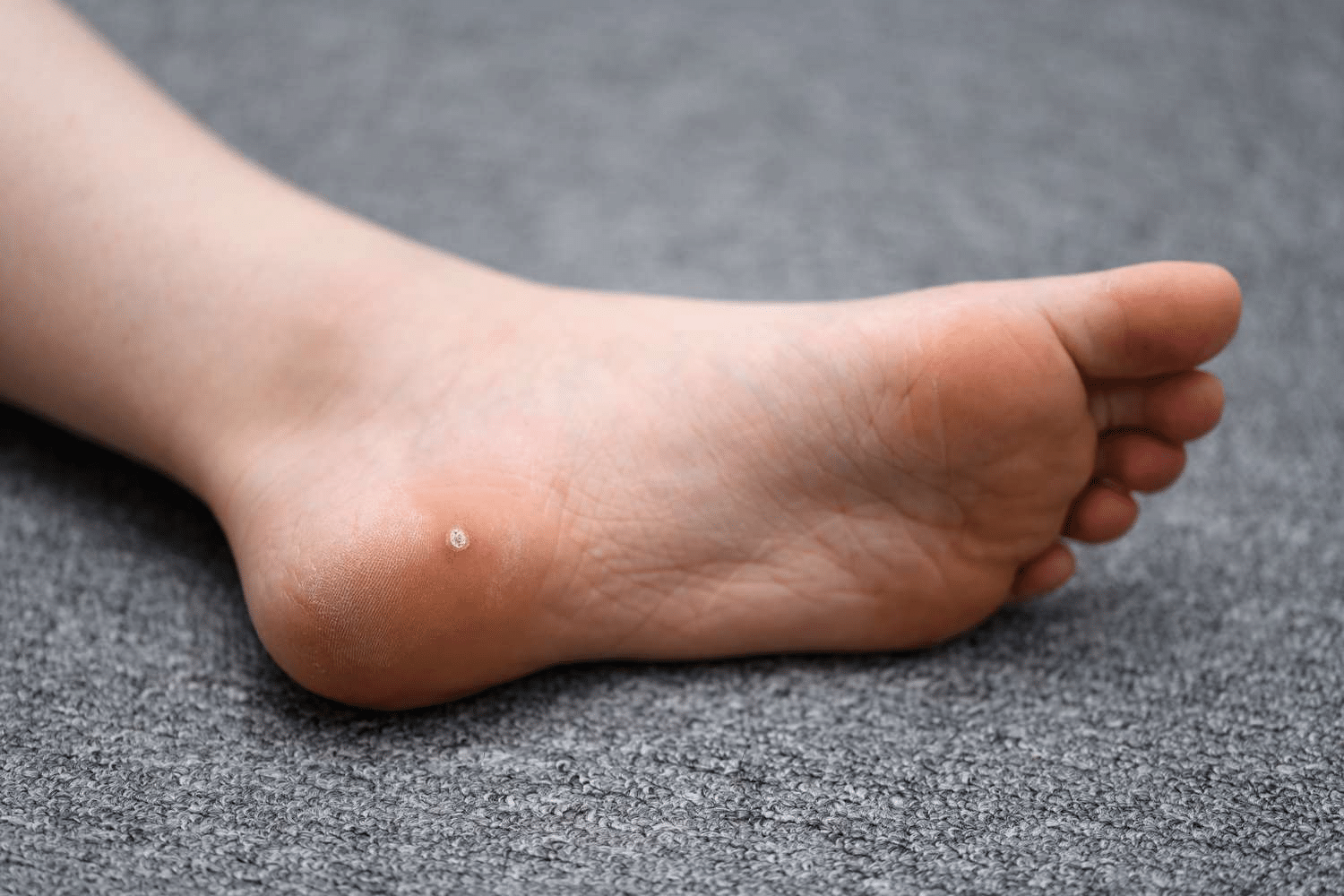
Wart or callus? How to tell the difference
A plantar wart has tiny black dots, breaks the skin lines, and hurts when squeezed from the sides; a callus is smooth, keeps the skin lines, and hurts with direct pressure.
Plantar wart
Tiny black dots in the center (clotted blood vessels), a rough surface that interrupts the normal skin lines of the foot, and pain when squeezed from the sides. May appear in clusters and can spread.
Callus
A smooth, thickened patch of skin over a pressure point with no black dots (see corns and calluses). The skin lines run through it uninterrupted, and it hurts with direct pressure rather than side pinching.
Treating a callus as a wart, or a wart as a callus, wastes weeks. A quick exam in the office settles it, and Dr. Lee can also rule out less common growths that can look similar.
What causes plantar warts?
Plantar warts spread through direct contact with the virus, and some people are more likely to get them than others. Common contributing factors include:
- Walking barefoot in shared wet areas such as pools, showers, and locker rooms
- Small cuts, cracks, or softened skin on the sole that let the virus in
- Being a child or teenager, since immunity to the wart virus builds with age
- Sweaty feet or shoes that stay damp
- A weakened immune system, which can make warts harder to clear
Plantar warts treatment options at CarePlus
No single treatment works for every wart. Dr. Lee matches the approach to the size, depth, and number of warts, how long they have been present, and what you have already tried. Treatment usually moves from the simplest option to the most targeted one.
Over-the-counter salicylic acid
For a small, painless wart that appeared recently, a drugstore salicylic acid product used consistently for several weeks may be enough. It softens and peels the wart layer by layer. It often fails on deep or long-standing plantar warts, and people with diabetes or poor circulation should not use it without medical guidance.
Cryotherapy (in-office freezing)
Cryotherapy applies liquid nitrogen to the wart to destroy the infected tissue. It is quick, done in the office, and generally covered by insurance. Most warts need several sessions spaced a few weeks apart, and some deep warts regrow because the freeze does not reach the base.
Prescription medication
When over-the-counter products are not strong enough, Dr. Lee can prescribe stronger topical medication and monitor your response at follow-up visits. Prescription treatment is often combined with in-office care for stubborn warts.
Swift microwave therapy
For warts that have resisted other treatments, Swift microwave therapy uses low-dose microwave energy to prompt your immune system to target the HPV virus itself, with no cutting, no bandages, and no downtime. Most plans involve three to four short sessions about four weeks apart. Swift is a self-pay treatment, since insurers currently classify it as non-covered.
Surgical removal
Surgical excision of plantar warts is rarely needed today. Modern treatments resolve most warts without cutting, and surgery on the sole carries a risk of a painful scar. Dr. Lee reserves it for exceptional cases.
What to expect at your visit
Your first visit starts with an exam to confirm that the growth is a wart and to check for other warts developing nearby. Dr. Lee then explains your options honestly, including what has the best chance of working for your wart and what each option involves in time and cost. Most treatments begin at that same visit. Follow-up visits are scheduled a few weeks apart so progress can be checked and the plan adjusted if a wart is slow to respond.
When should you see a podiatrist for a wart?
Many small warts can be watched or treated at home. See a podiatrist promptly if:
- The wart is painful enough to change how you walk or stand
- Warts are spreading, multiplying, or forming a cluster
- You have diabetes, poor circulation, or a weakened immune system, since home wart treatments can cause wounds that are slow to heal
- The growth bleeds, changes color or shape, or you are not sure it is a wart
- Several weeks of over-the-counter treatment have not helped
If you need to be seen quickly, see our same-day and urgent foot care options, or call (425) 455-0936 and we will help you decide.
Is plantar warts treatment covered by insurance?
In-office wart treatment such as cryotherapy and prescription medication is generally considered a medical service, and most plans cover it subject to your deductible and copay. Swift microwave therapy is classified as non-covered and is offered as a self-pay treatment.
Our clinic assists with benefit checks as a courtesy, but we cannot guarantee coverage. Insurance companies may give incomplete information and reserve the right to deny a claim later, so final responsibility for verifying coverage rests with the patient. For help reviewing your plan, call (425) 455-0936 and we will walk through it with you before you decide to proceed.
Why choose CarePlus for plantar warts treatment?
Warts that keep coming back are usually warts that were never fully treated. Dr. Hubert Lee is a board-certified, fellowship-trained podiatrist with more than 15 years of experience, and he offers the full range of plantar warts treatments in one office, from cryotherapy and prescription medication to Swift microwave therapy, so the plan can escalate without sending you elsewhere. Patients across Bellevue, Redmond, Kirkland, Mercer Island, Issaquah, Sammamish, and the greater Seattle area come to CarePlus for honest options and a realistic picture of what to expect.
Frequently Asked Questions About Plantar Warts
How do I know if I have a plantar wart or a callus?
A plantar wart usually has tiny black dots in the center, interrupts the normal skin lines of your foot, and hurts when you squeeze it from the sides. A callus is a smooth patch of thickened skin that hurts with direct pressure and keeps the skin lines. Because the two are easy to confuse, Dr. Lee confirms the diagnosis in the office before recommending treatment.
Can plantar warts go away on their own?
Some plantar warts clear on their own over months to a couple of years, especially in children. Warts that are painful, spreading, or lasting more than a few months are worth treating, since they can grow deeper and become harder to clear the longer they are left.
Why does my wart keep coming back after freezing?
Freezing and acids work on the surface of the wart, and a deep plantar wart can survive underneath and regrow. Repeated treatments spaced a few weeks apart are often needed, and warts that resist freezing may respond to prescription medication or Swift microwave therapy, which targets the virus rather than the surface skin.
Are plantar warts contagious?
Yes. Plantar warts are caused by strains of the human papillomavirus (HPV), which spreads through direct contact and on damp surfaces such as pool decks and locker room floors. Wearing sandals in shared wet areas, keeping feet dry, and not sharing towels or shoes can help reduce the chance of spreading warts to family members or to other parts of your own foot.
Is Swift therapy right for me?
Swift microwave therapy is often chosen for stubborn plantar warts that have not responded to freezing, acids, or prescription treatment, and for patients who want to avoid cutting and downtime. It is a self-pay treatment. Dr. Lee will tell you whether Swift is a good fit or whether a covered treatment is the better first step.
Is plantar warts treatment covered by insurance?
In-office wart treatment such as cryotherapy and prescription medication is generally considered a medical service, and most plans cover it subject to your deductible and copay. Swift microwave therapy is classified as non-covered and is offered as a self-pay treatment. We assist with benefit checks, but final responsibility for confirming coverage rests with the patient.
How quickly can I be seen for a painful wart in Bellevue?
CarePlus offers same-day and urgent appointments for painful foot problems, including plantar warts. Call (425) 455-0936 or schedule online, and most patients are seen within a few days.
Clear stubborn plantar warts in Bellevue
Find out which treatment gives your wart the best chance of clearing. Schedule an evaluation with Dr. Hubert Lee at CarePlus Foot and Ankle Specialists today.