
Achilles Tendinitis Treatment in Bellevue
Pain and stiffness at the back of your heel that flares after activities is often Achilles tendinitis. At CarePlus, Dr. Hubert Lee calms the tendon and gets you back to training and activities.
At CarePlus Foot and Ankle Specialists in Bellevue, Washington, Dr. Hubert Lee, fellowship-trained in sports medicine, diagnoses and treats Achilles tendinitis, the overuse injury that causes pain and stiffness at the back of the heel and ankle. We offer same-day and urgent care appointments for new injuries.
What is Achilles tendinitis?
Achilles tendinitis is inflammation of the Achilles tendon, the thick band of tissue that connects your calf muscles to your heel bone and powers walking, running, and jumping. It is one of the most common overuse injuries, especially in runners who add intensity or distance too quickly.
It is not the same as the heel pain on the underside of the foot, which is usually plantar fasciitis. Achilles tendinitis sits at the back of the heel and ankle, and treating it correctly starts with that distinction.
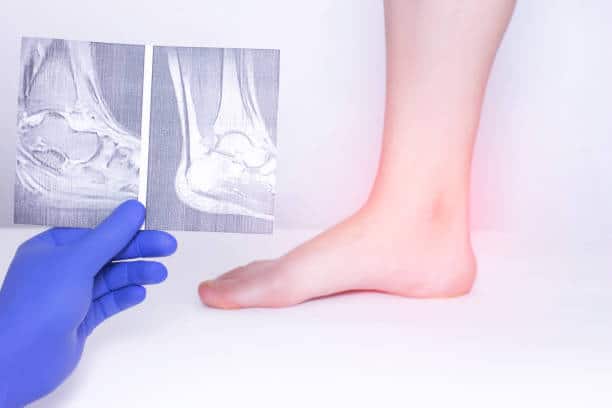
What Achilles tendinitis feels like
Achilles tendinitis tends to build gradually, with pain that is worse after activity and stiff after rest:
- Dull ache or pain at the back of the heel
- Stiffness in the morning or after sitting
- Pain that worsens during or after activity
- Tenderness or swelling along the tendon
- Tightness in the calf and tendon
- A sense that the tendon is weak or strained
What raises your risk
Achilles tendinitis builds up from repeated strain on the tendon. Common contributors include:
- A sudden increase in training intensity or frequency
- Tight or weak calf muscles
- Worn or unsupportive footwear
- Weekend sports such as tennis or basketball in middle age
Haglund’s deformity (pump bump)
A Haglund’s deformity is a bony enlargement at the back of the heel, where the Achilles tendon attaches. It is sometimes called a pump bump, because stiff-backed shoes such as pumps, dress shoes, or rigid heel counters can rub against it and inflame the tissue and the small bursa nearby. It often travels with insertional Achilles tendinitis, since both affect the same spot at the back of the heel. The pain comes from that irritation rather than the bump itself, so care starts conservatively, with softer or open-backed footwear, heel lifts or padding, stretching, and orthotics, alongside the same tendon-calming approach used for Achilles tendinitis.
Our approach at CarePlus
Dr. Lee treats Achilles tendinitis conservatively first. After confirming the diagnosis, he calms the tendon with rest, activity changes, and medications, followed by stretching, a heel lift or custom orthotics, and physical therapy when necessary. If symptoms persist, he discusses further options with you before any step is taken.
What to expect
Tendons heal slowly, so patience matters. Most people recover with conservative care and a gradual return to activity, but coming back too fast tends to restart the pain. Starting early keeps treatment simpler. If your footwear or mechanics are part of the problem, Dr. Lee can address that too.
Why choose CarePlus for Achilles tendinitis
Pain at the back of the heel has more than one cause, and the right plan depends on the right diagnosis. Dr. Hubert Lee is a board-certified podiatrist with more than 15 years of experience and the Foot & Ankle Sports Medicine Fellowship at Virginia Mason Franciscan Health, so your tendon is assessed correctly and treated conservatively first. Athletes and active people across Bellevue, Redmond, Kirkland, Mercer Island, Issaquah, Sammamish, and the greater Seattle area come to CarePlus for that difference.
Frequently Asked Questions About Achilles Tendinitis
Why does the back of my heel hurt when I run?
Pain at the back of the heel during or after running is most often Achilles tendinitis, an overuse irritation of the tendon that connects your calf to your heel bone. It is often linked to a quick jump in mileage, tight calves, or worn-out shoes. Easing off and getting it checked early keeps it from becoming a longer problem.
Why is the back of my ankle stiff in the morning?
Stiffness and pain at the back of the ankle and heel first thing in the morning, or after sitting, is a common sign of Achilles tendinitis. The tendon tightens at rest and loosens as you move. If it keeps happening, an exam can confirm the cause and start treatment.
Is Achilles tendinitis the same as heel pain?
They are related but not the same. Achilles tendinitis affects the tendon at the back of the heel and ankle, while most general heel pain is plantar fasciitis on the underside of the heel. Telling them apart matters because the treatment differs, which is why an exam is worthwhile.
How long does Achilles tendinitis take to heal?
Tendons heal slowly, so recovery can take several weeks to a few months depending on severity and how early care begins. Resting the tendon and adjusting activity are key, and rushing back often restarts the cycle.
When should I see a podiatrist for Achilles pain?
See a podiatrist if the pain lasts more than a few days, returns every time you train, limits your walking, or comes with swelling. Early care is simpler and helps protect the tendon. For new injuries, CarePlus offers same-day and urgent appointments.
How is Achilles tendinitis treated at CarePlus?
Dr. Lee starts with conservative care: rest, activity changes, stretching, and support such as a heel lift or custom orthotics, with physical therapy when helpful. If symptoms persist, he discusses further options with you before any step is taken.
What is the bump on the back of my heel?
A firm bump at the back of the heel is often a Haglund’s deformity, a bony enlargement where the Achilles tendon attaches. It is frequently irritated by stiff-backed shoes, which is why it is nicknamed a pump bump. The pain comes from the inflamed tissue around it, and it usually responds to footwear changes and the same conservative care used for Achilles tendinitis.
Get back to pain-free movement in Bellevue
Do not train through Achilles pain and hope it fades. See Dr. Lee at CarePlus Foot and Ankle Specialists for a clear diagnosis and a plan. Same-day and urgent appointments are available.