
Morton’s Neuroma Treatment in Bellevue
That burning pain in the ball of your foot is often a Morton’s neuroma. At CarePlus, Dr. Hubert Lee pinpoints the cause and relieves it, starting with the least invasive care that fits your case.
At CarePlus Foot and Ankle Specialists in Bellevue, Washington, Dr. Hubert Lee diagnoses and treats Morton’s neuroma, the nerve irritation that causes burning, numbness, and pain in the ball of the foot. We offer same-day and urgent care appointments for new problems.
What is a Morton’s neuroma?
A Morton’s neuroma is a thickening and irritation of one of the nerves that runs between your toes, most often between the third and fourth toes. It is not a tumor and it is not dangerous, but as the nerve becomes inflamed it sends pain, burning, and numbness into the ball of the foot and toes.
The tissue around the nerve is squeezed by the bones of the forefoot, which is why narrow shoes, high heels, and high-impact activity tend to make it worse. Caught early, it usually responds well to simple, conservative care.
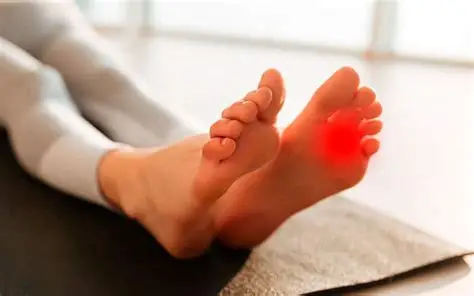
What a Morton’s neuroma feels like
A Morton’s neuroma usually shows up as forefoot symptoms that worsen with activity and tight shoes:
- Burning or sharp pain in the ball of the foot
- Numbness or tingling in the toes
- The feeling of a pebble or bunched sock underfoot
- Pain that worsens in tight shoes or high heels
- Relief when you remove your shoe
- Pain that radiates into the toes during activity
What raises your risk
A Morton’s neuroma usually comes from pressure and repeated irritation of the nerve over time. Common contributors include:
- Narrow, tight, or pointed shoes
- High heels that load the forefoot
- Running and other high-impact sports
- Bunions, hammertoes, flat feet, or high arches
Metatarsalgia and other ball-of-foot pain
Not all ball-of-foot pain is a neuroma. Metatarsalgia is a general term for pain and inflammation in the ball of the foot, centered on the heads of the long metatarsal bones rather than on a nerve. It tends to feel like a dull ache or a bruised, walking-on-a-stone sensation under the ball of the foot, and it often comes from high-impact activity, tight or unsupportive shoes, high arches, or a foot shape that overloads one part of the forefoot. It can occur on its own or alongside a neuroma, and the conservative care overlaps closely: roomier footwear, metatarsal padding, and custom orthotics to take pressure off the forefoot.
Our approach at CarePlus
Dr. Lee treats a Morton’s neuroma conservatively first, and most cases improve without surgery. After confirming the diagnosis, sometimes with imaging, he takes pressure off the nerve with roomier footwear, metatarsal padding, and custom orthotics, and calms the inflammation with activity changes and, when appropriate, a corticosteroid injection. If conservative care does not relieve the pain, he discusses further options with you before any step is taken.
What to expect
Most people who start care early get relief without surgery, and the earlier a neuroma is treated, the simpler that care tends to be. The burning and numbness are worth addressing before they limit your activity. If you also need support for another reason, Dr. Lee can often address both at once.
Why choose CarePlus for Morton’s neuroma
Ball-of-foot pain has several possible causes, and the right treatment depends on the right diagnosis. Dr. Hubert Lee is a board-certified, fellowship-trained podiatrist with more than 15 years of experience and a focus on sports medicine, so your neuroma is identified correctly and treated conservatively first. Patients across Bellevue, Redmond, Kirkland, Mercer Island, Issaquah, Sammamish, and the greater Seattle area come to CarePlus for that difference.
Frequently Asked Questions About Morton’s Neuroma
Why does it feel like there’s a pebble in my shoe?
That pebble or bunched-sock sensation under the ball of the foot, when nothing is there, is a classic sign of a Morton’s neuroma, an irritated nerve between the toes. It often comes with burning or numbness and eases when you take your shoe off. If it keeps returning, it is worth having the foot examined.
Why is the ball of my foot burning or numb?
Burning, tingling, or numbness in the ball of the foot and toes is often a Morton’s neuroma, where a nerve between the toes becomes thickened and irritated. Tight shoes and high heels tend to make it worse. Other forefoot problems can feel similar, so an exam is the best way to be sure.
What causes a Morton’s neuroma?
It develops when a nerve between the toes, most often between the third and fourth toes, becomes thickened and irritated. Tight or narrow shoes, high heels, high-impact activity, and foot shapes such as bunions, flat feet, or high arches all raise the risk.
Can a Morton’s neuroma go away without surgery?
Often, yes. Many people improve with conservative care such as roomier footwear, padding, orthotics, and activity changes, especially when treatment starts early. Surgery is considered only when these measures do not relieve the pain.
How is a Morton’s neuroma diagnosed?
Dr. Lee reviews your symptoms and history and examines your foot, gently pressing between the toes to locate the tender spot. Imaging such as ultrasound or MRI is sometimes used to confirm the diagnosis or rule out other causes of ball-of-foot pain.
How is a Morton’s neuroma treated at CarePlus?
We start with the least invasive options that fit your case, including footwear changes, metatarsal padding, custom orthotics, and activity adjustments. If pain persists, a corticosteroid injection may help, with advanced options discussed only if conservative care does not work.
What is the difference between a neuroma and metatarsalgia?
Both cause ball-of-foot pain, but the source differs. A Morton’s neuroma is an irritated nerve, so it tends to burn, tingle, or feel numb, often between specific toes. Metatarsalgia is inflammation around the metatarsal bones, so it tends to ache and feels like a bruise or a stone underfoot. They can also occur together, so an exam is the best way to tell which you have.
Relieve ball-of-foot pain in Bellevue
You do not have to live with the burning and numbness. See Dr. Lee at CarePlus Foot and Ankle Specialists for a clear diagnosis and a plan. Same-day and urgent appointments are available.